Sparsh
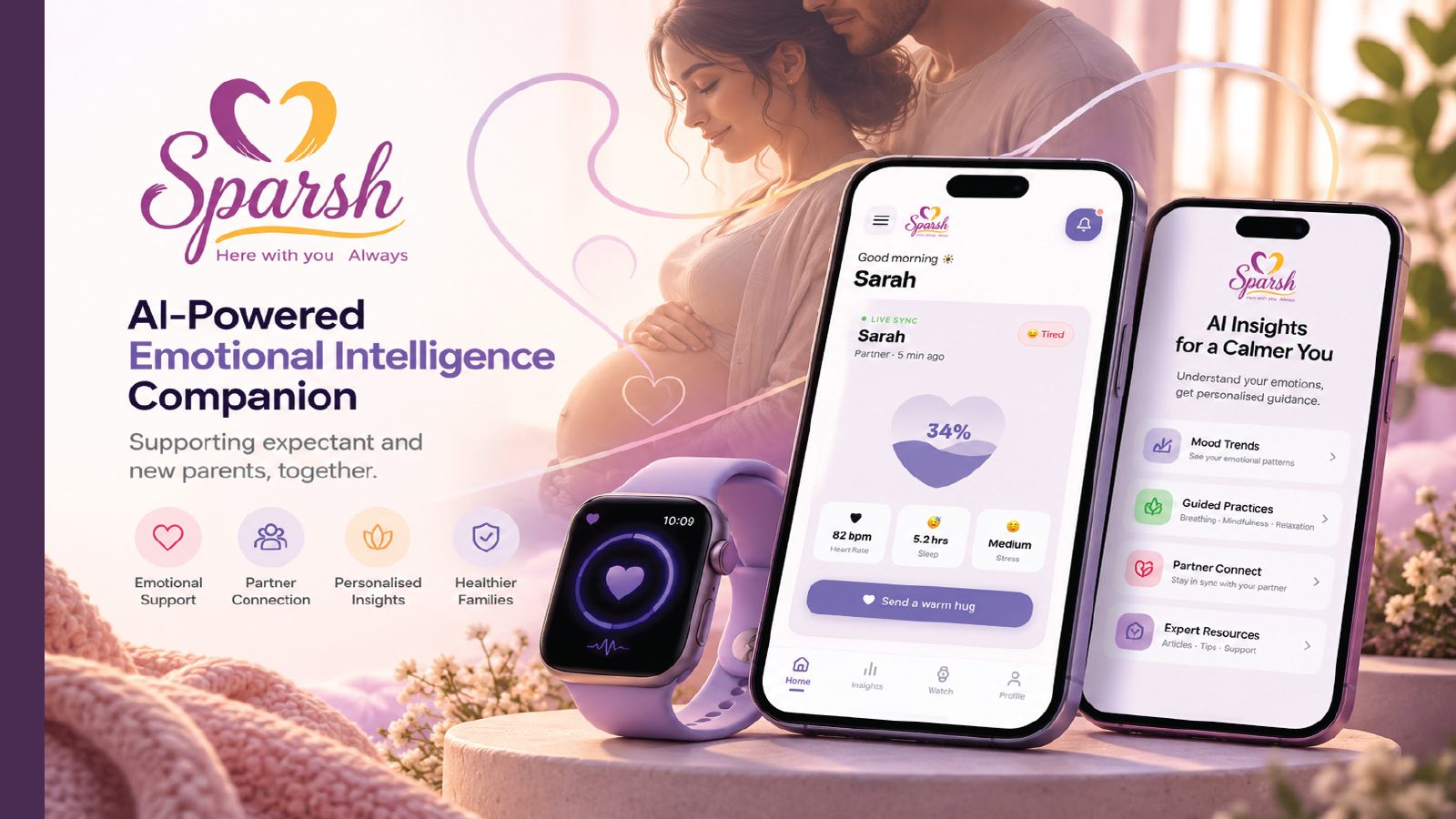
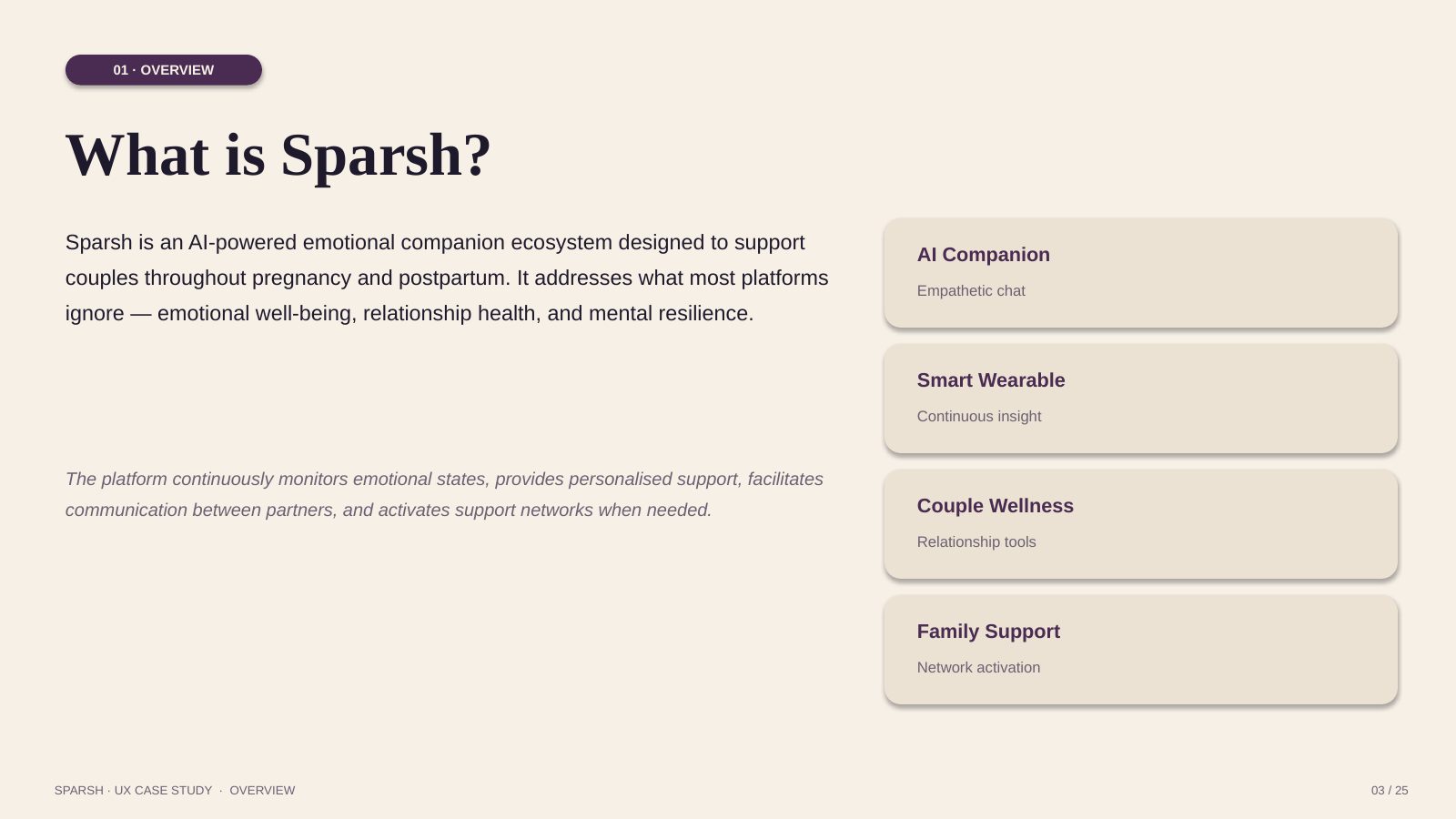
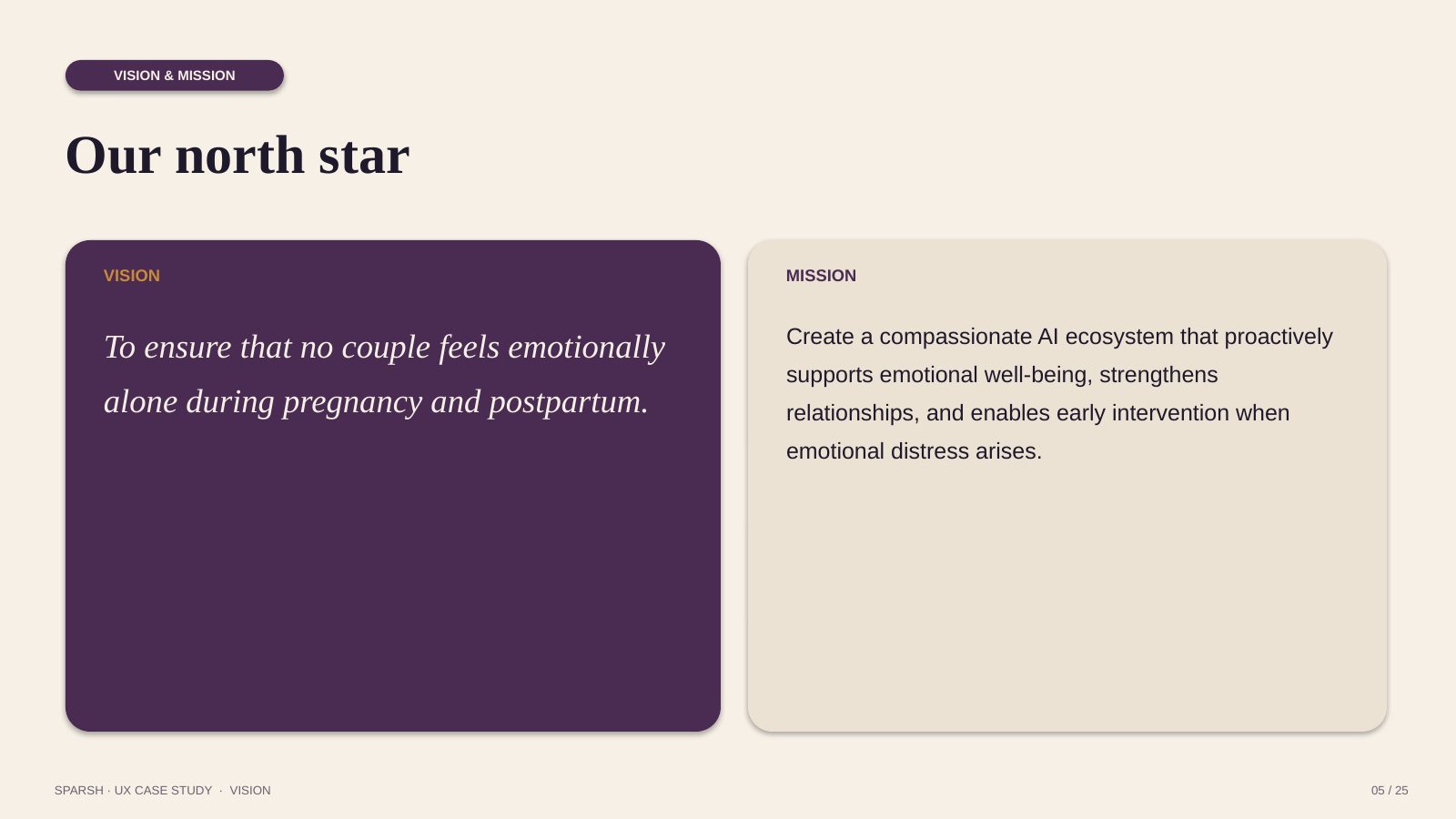
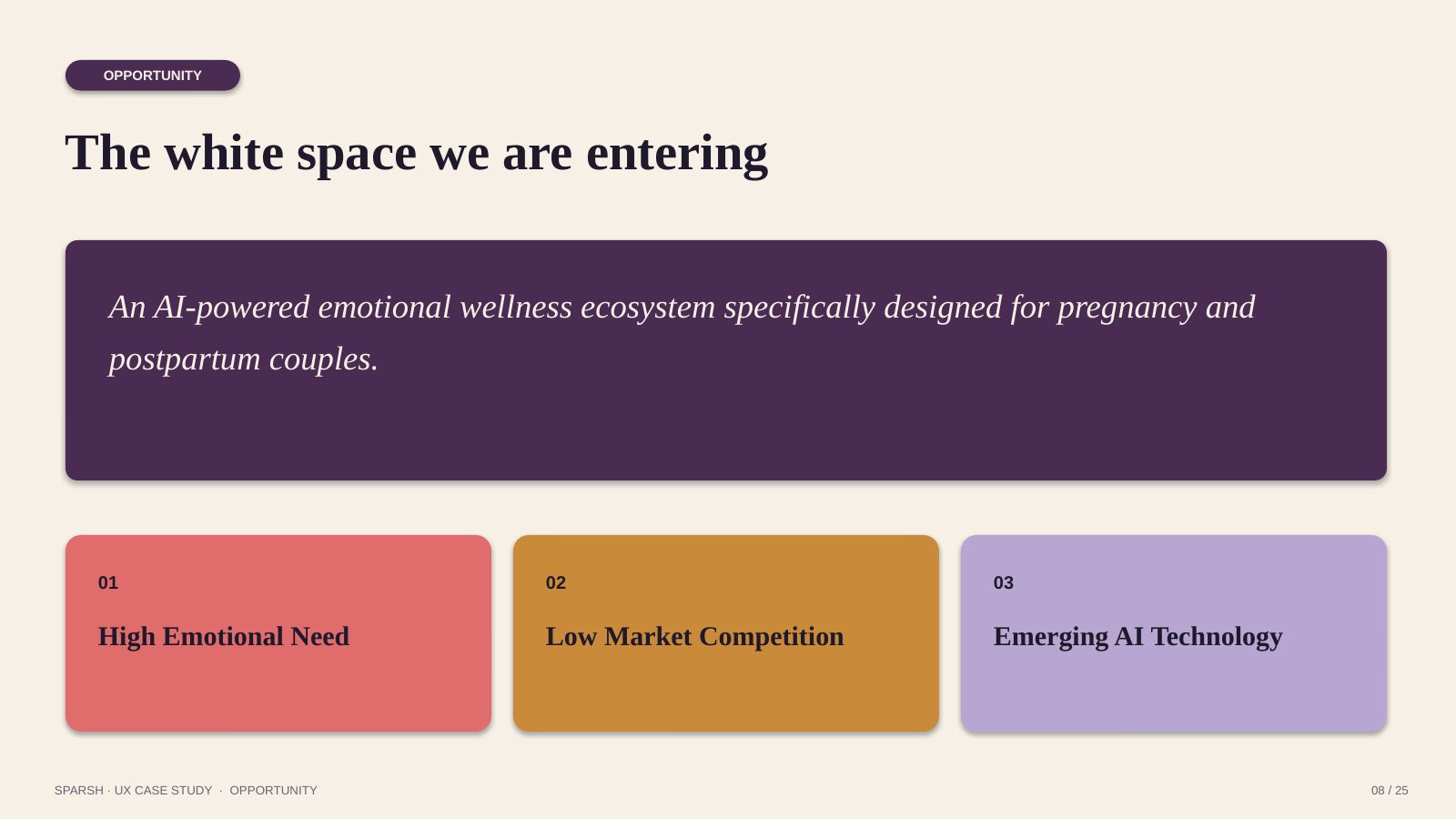
The world's first AI-powered emotional companion ecosystem for expecting and postpartum couples.
- Domain
- AI-powered emotional companion between partners
- Role
- UX research & UI designing
- Duration
- 60 days
- Team
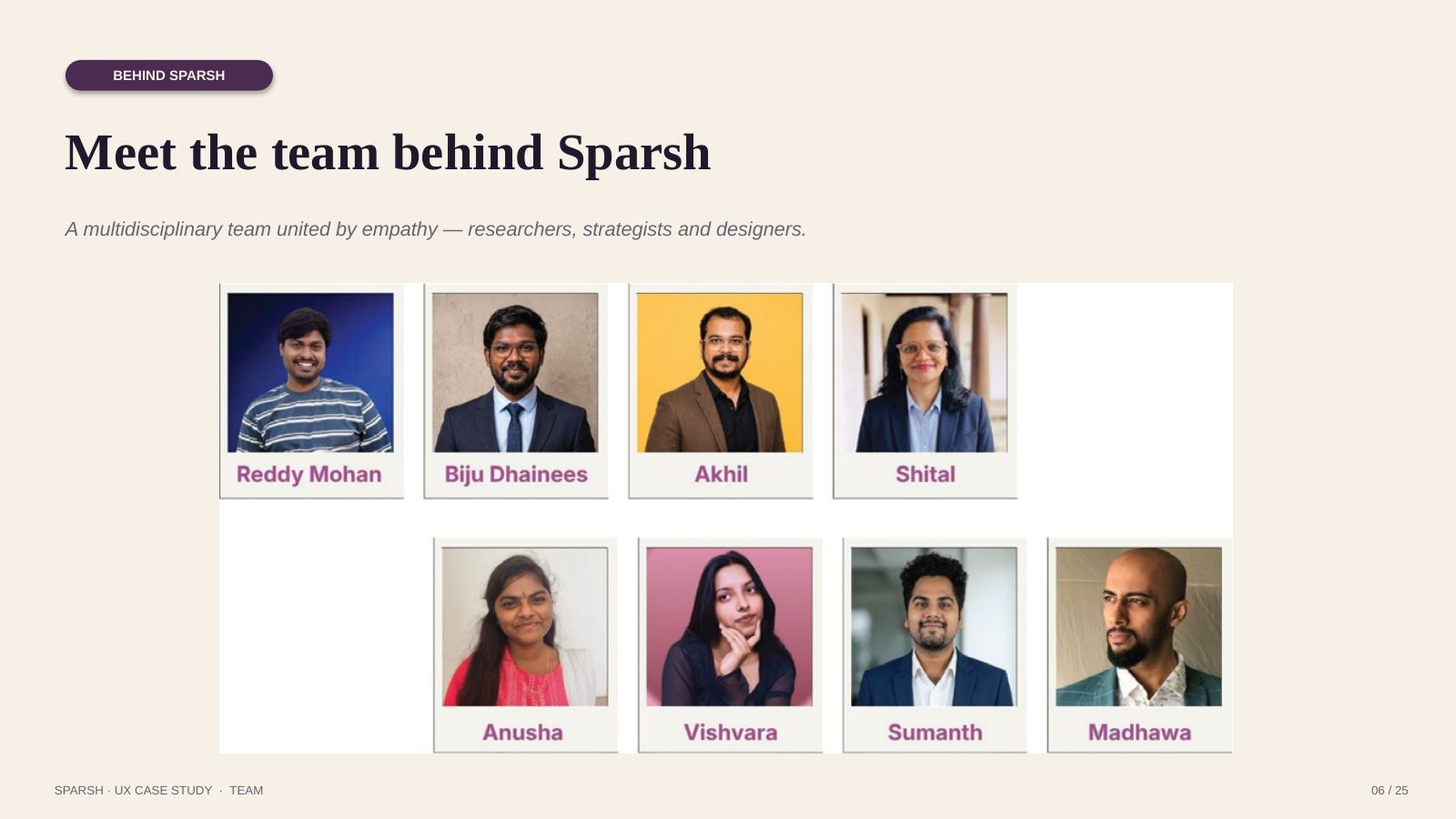
- 8-member team
- Status
- Research (user interviews, mood boards) / low-fidelity wireframes
Outcome summary
With an 8-member team, I designed the research and low-fidelity wireframes for an ecosystem connecting the Sparsh Watch, the Emotion Detection AI and the Sparsh App with a family support network — turning emotional check-ins into quick-tap simplicity for parents under stress.
Problem Context
The problem
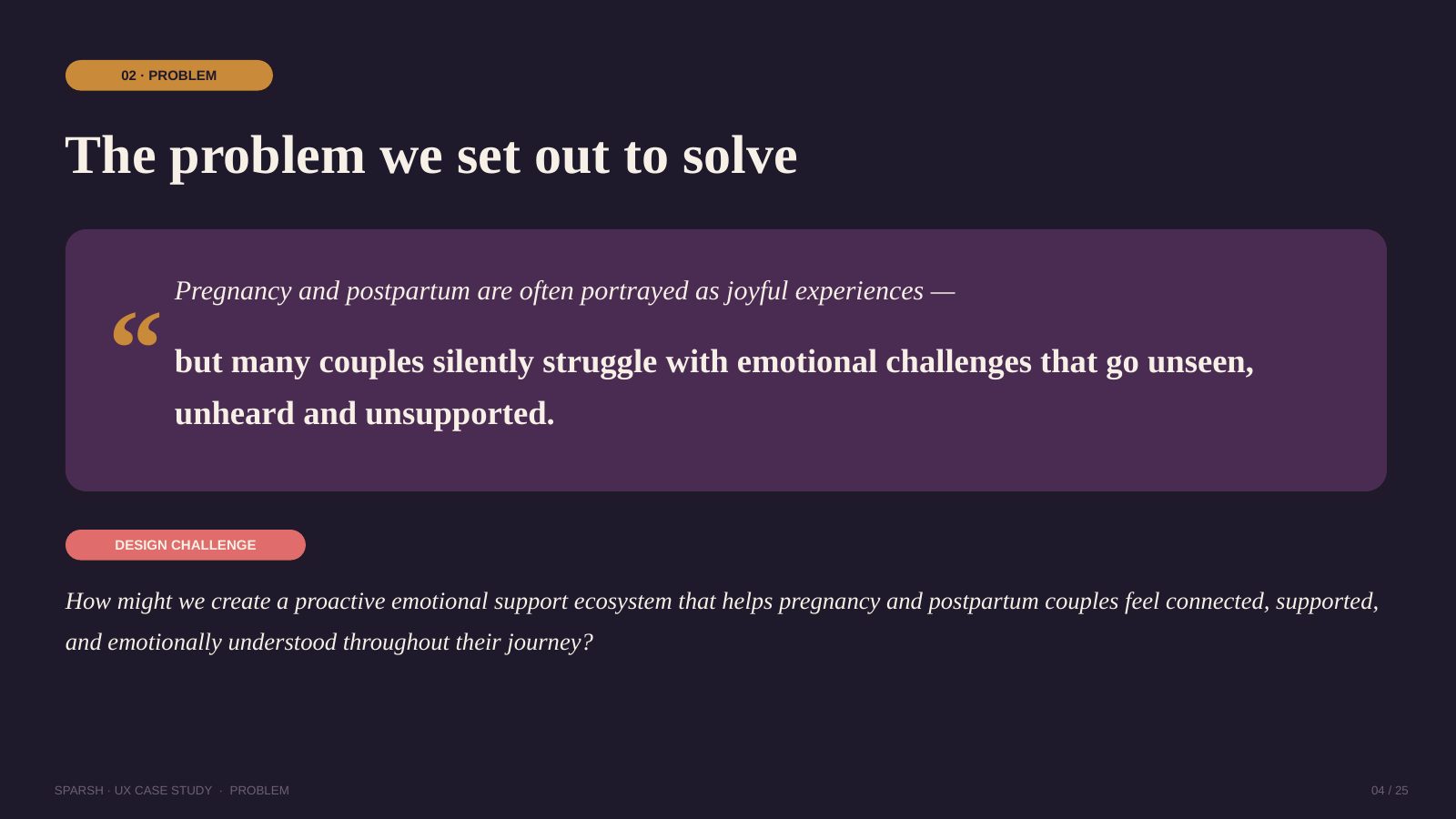
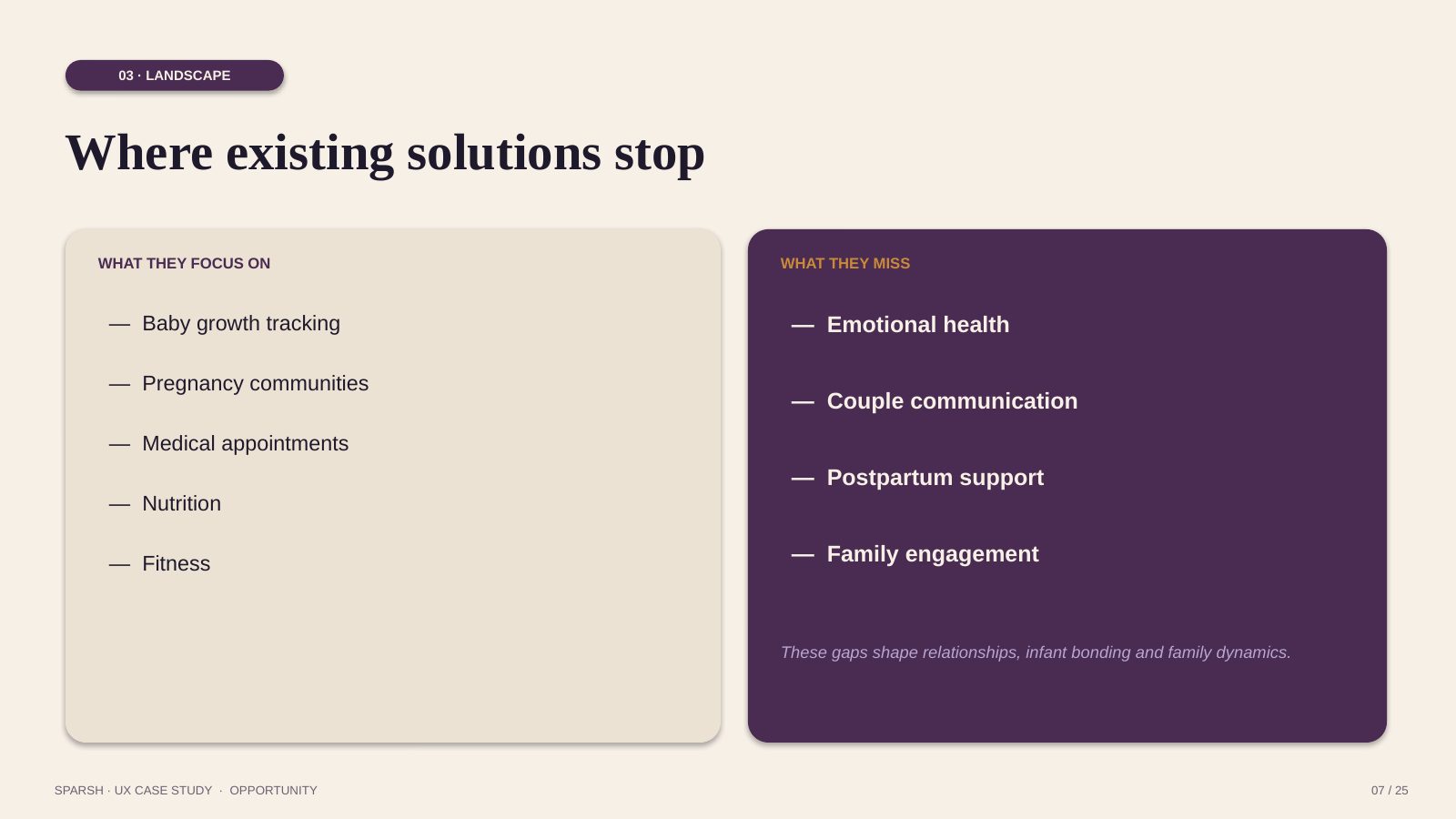
We designed Sparsh — the world's first AI-powered emotional companion ecosystem for expecting and postpartum couples. While traditional healthcare focus areas heavily target physical health, emotional well-being and relationship strain during pregnancy are often completely overlooked.
Who was affected
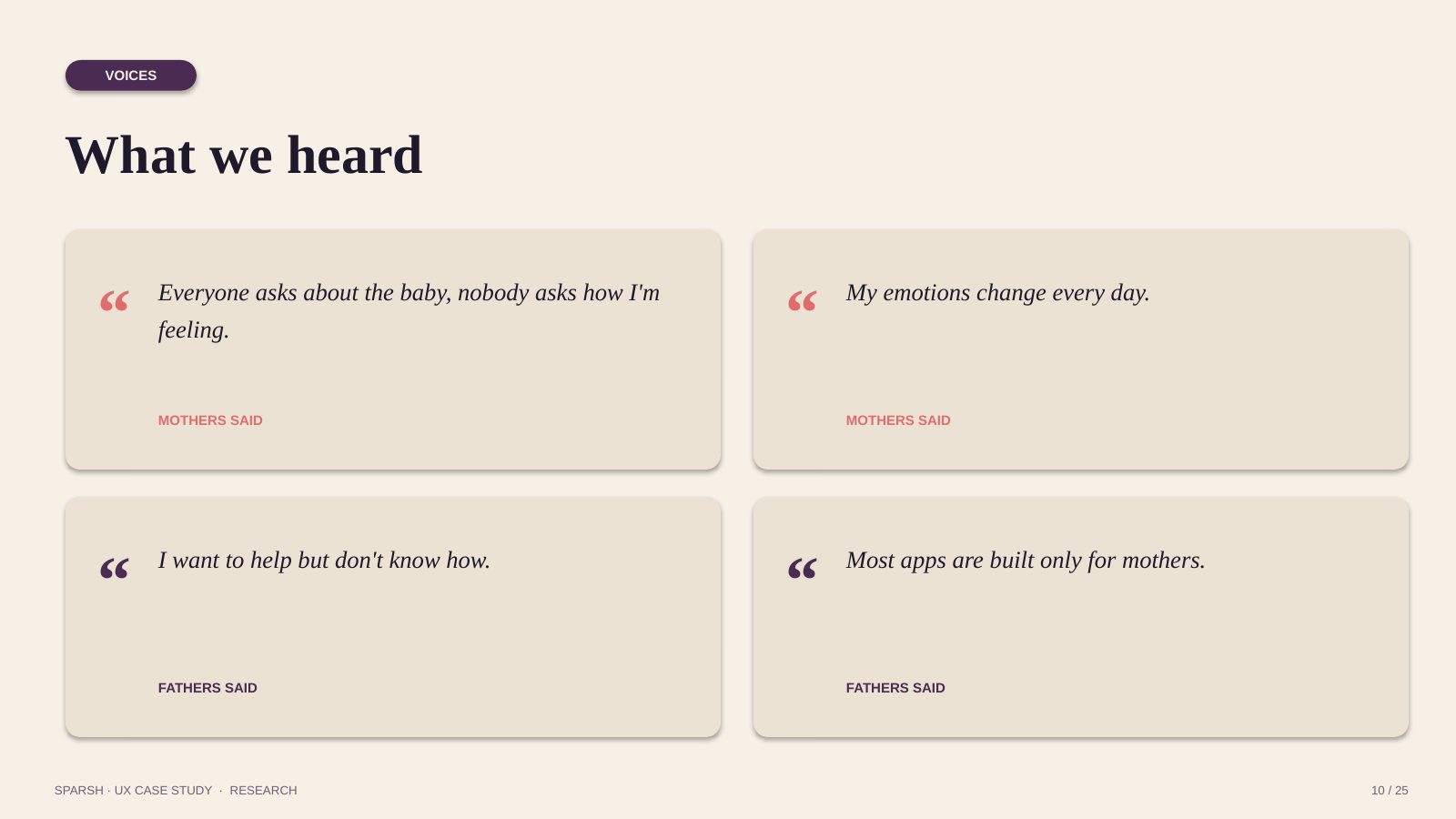
It deeply affected expecting and new mothers, but also left fathers feeling disconnected and unable to understand or support their partners.
Why it mattered
Pregnancy and the months after childbirth bring massive emotional changes, high stress and mood swings. Without proper support, these struggles often lead to severe relationship strain or hidden postpartum depression. Parents were suffering from emotional loneliness and isolation because they found it hard to express their feelings — there was a critical need for a tool that could continuously monitor emotional distress and step in with AI help before things got worse.
History
History of the project
Background
Healthcare systems and mobile apps almost entirely focused on the physical health of pregnant women, leaving their emotional struggles and mental health completely ignored.
Trigger
Parents were suffering from emotional loneliness and isolation because they found it hard to express their feelings — a critical need emerged for a tool that could continuously monitor emotional distress and step in with AI help before things got worse.
Context before the solution
Traditional healthcare focus areas heavily target physical health; emotional well-being and relationship strain during pregnancy are often completely overlooked.
Geography
Users & context
- Target user
- Expecting mothers, new mothers and expecting fathers (ages 21–40).
- Environment
- Mostly at home during daily family life, or in high-stress work environments where busy schedules limit couple communication.
- Devices
- A connected ecosystem: the Sparsh Watch (smart wearable) and the Sparsh App (smartphone).
- Digital comfort
- Medium to high — comfortably uses smartphones, mobile apps and basic health-tracking features.
- Market / domain
- The rapidly growing market of mental health tech, family wellness and wearable healthcare technology.
- Where the problem happens
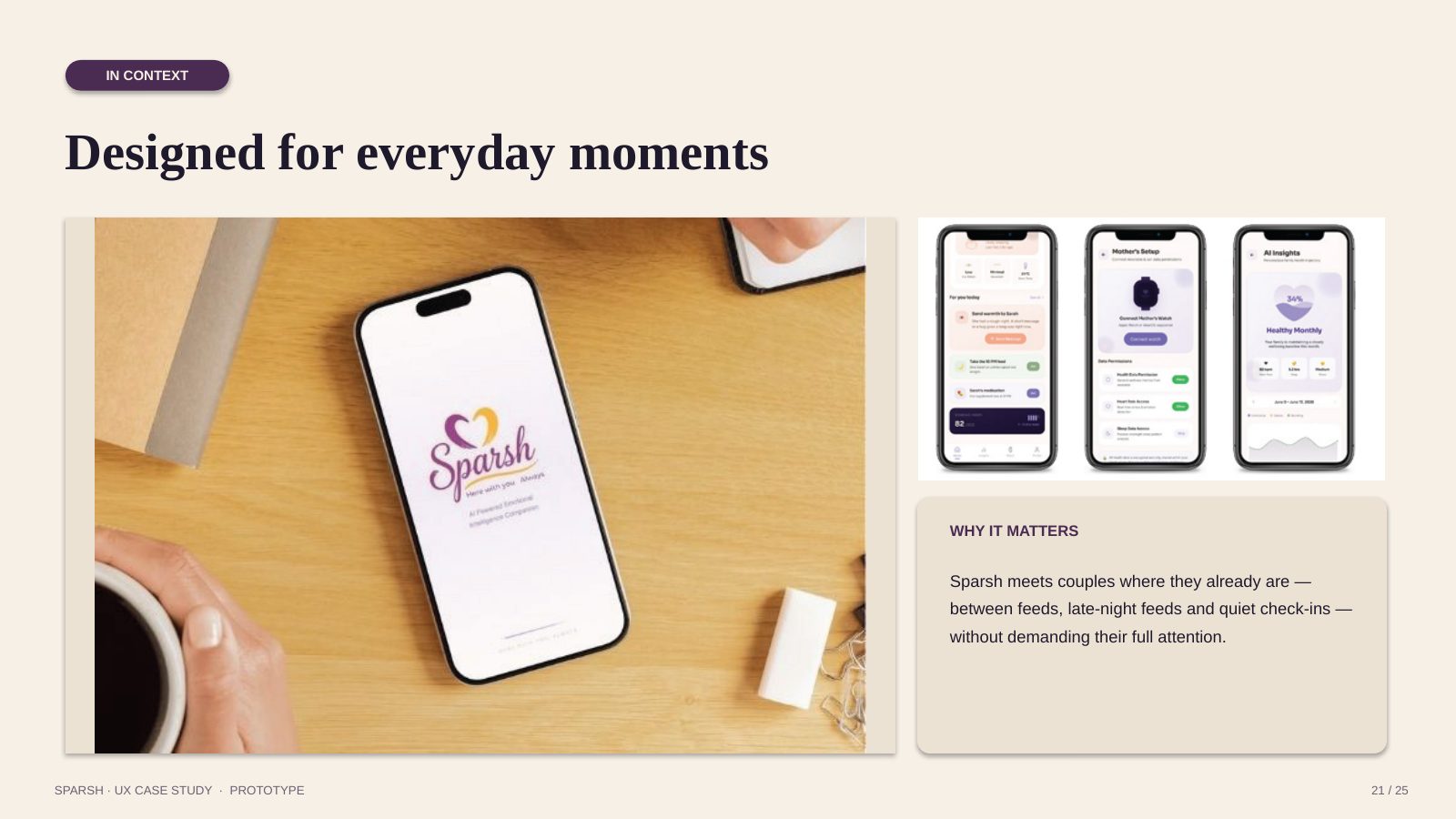
- In everyday moments — at home when mood swings cause misunderstandings, at work when stress levels spike silently, or late at night when feelings of loneliness hit.
Physics
How the product works
Main user journey
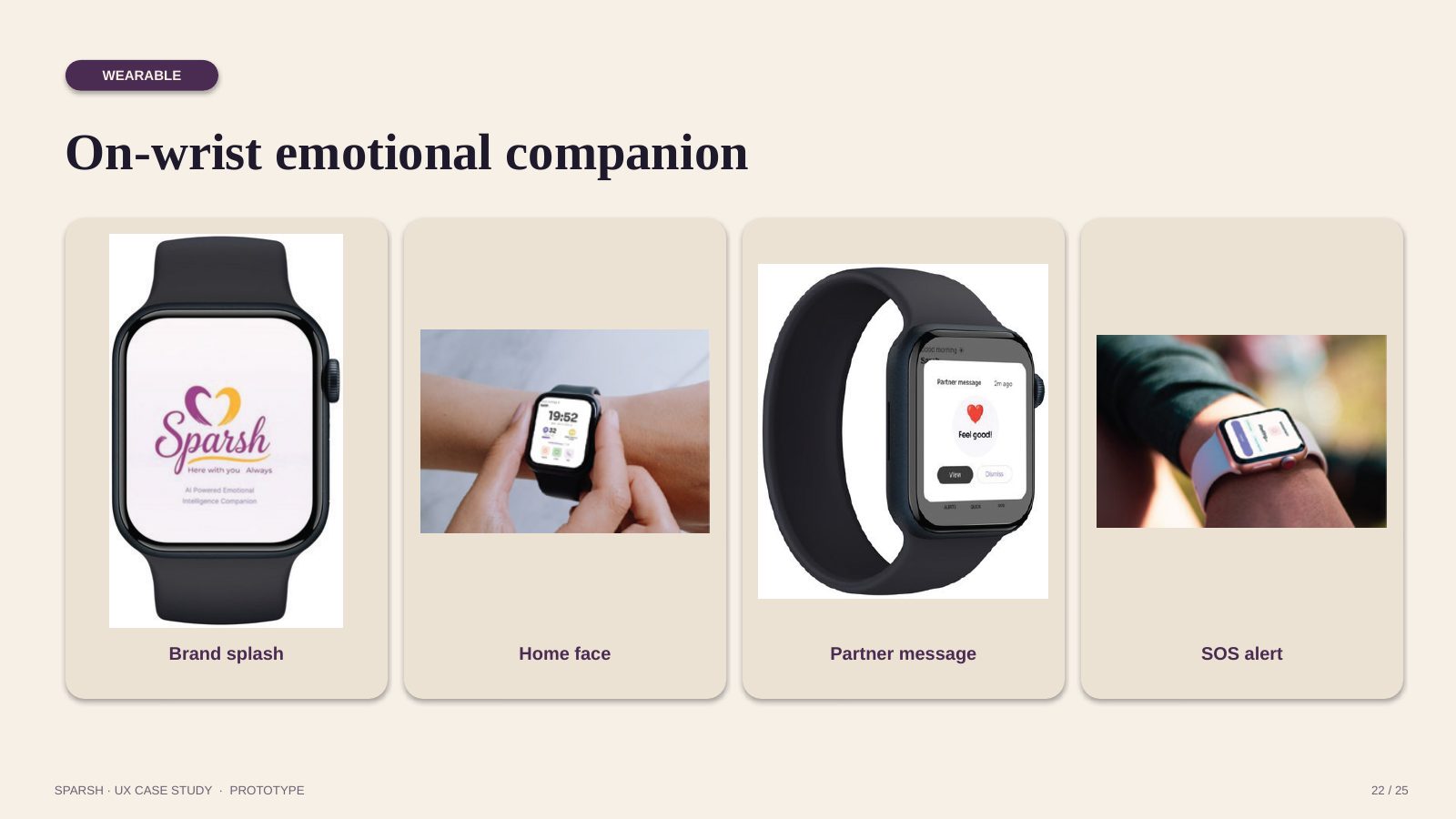
The user's smart watch silently monitors their stress; when a spike is detected, the companion AI initiates a gentle check-in on the phone app, helps them process their emotions, and connects them with their partner or family if needed.
Top user tasks
- Tracking and viewing daily emotional and stress insights via the dashboard.
- Talking to the 24/7 conversational AI companion during stressful moments.
- Receiving and interacting with relationship-strengthening prompts sent to both partners.
Main friction points
- Expecting parents are already tired and overwhelmed, making complex navigation frustrating.
- Reluctance to manually log deep emotions when feeling anxious or lonely.
- Ensuring the data flow between a wearable watch and a mobile app happens instantly, without syncing delays.
Information architecture
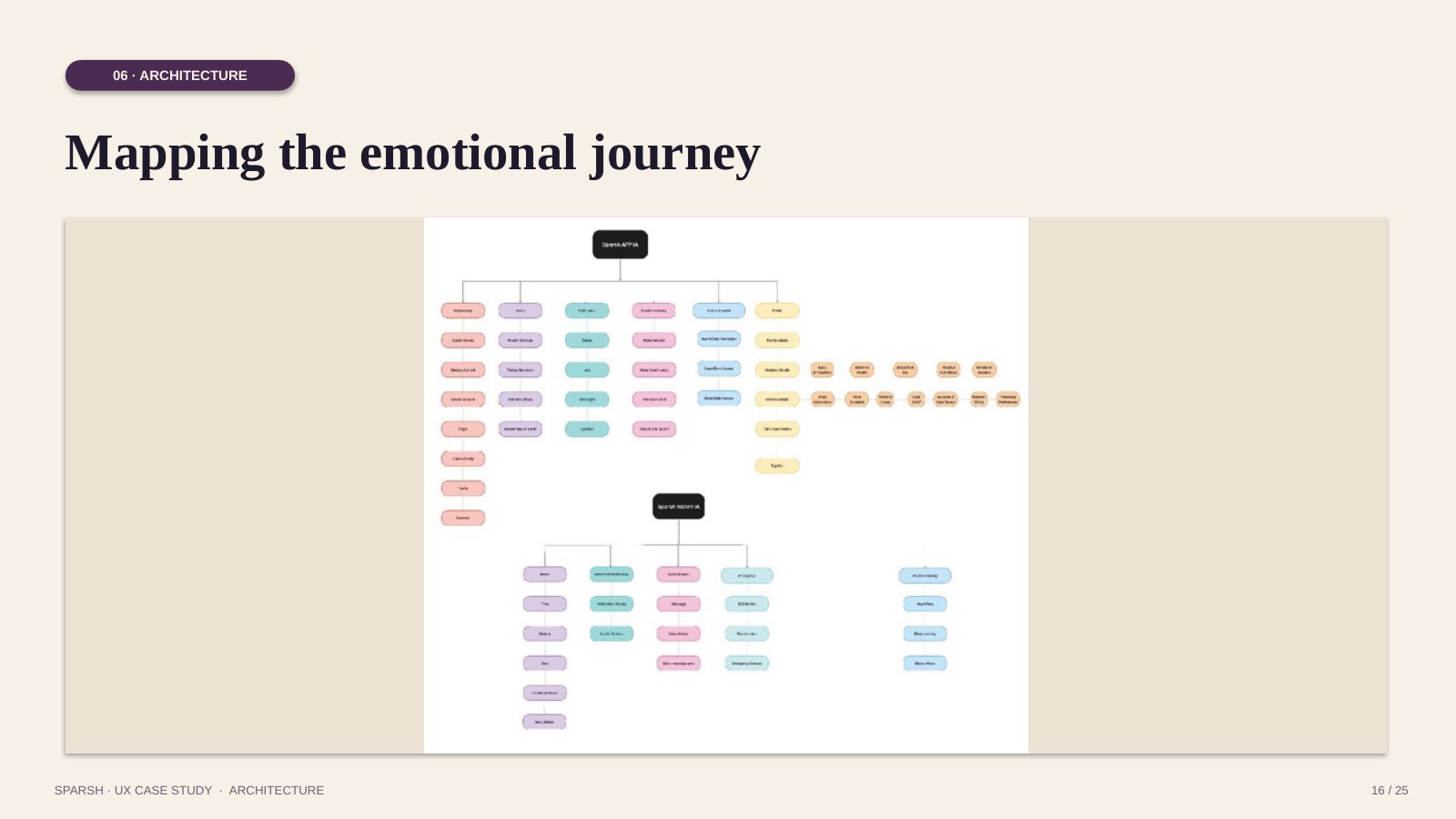
A connected ecosystem flow: biometric sensor data from the Sparsh Watch feeds into the Emotion Detection AI, which populates the Sparsh App dashboard and extends actionable alerts to the Family Support Ecosystem.
Example user flow
Watch detects high stress → AI initiates conversation on the app → user shares feelings → AI provides personalized coping strategies → app updates the mood dashboard.
Where users get stuck
Users can easily get stuck or lose interest if they are forced to type out long text answers during moments of severe emotional exhaustion or panic.
What I simplified
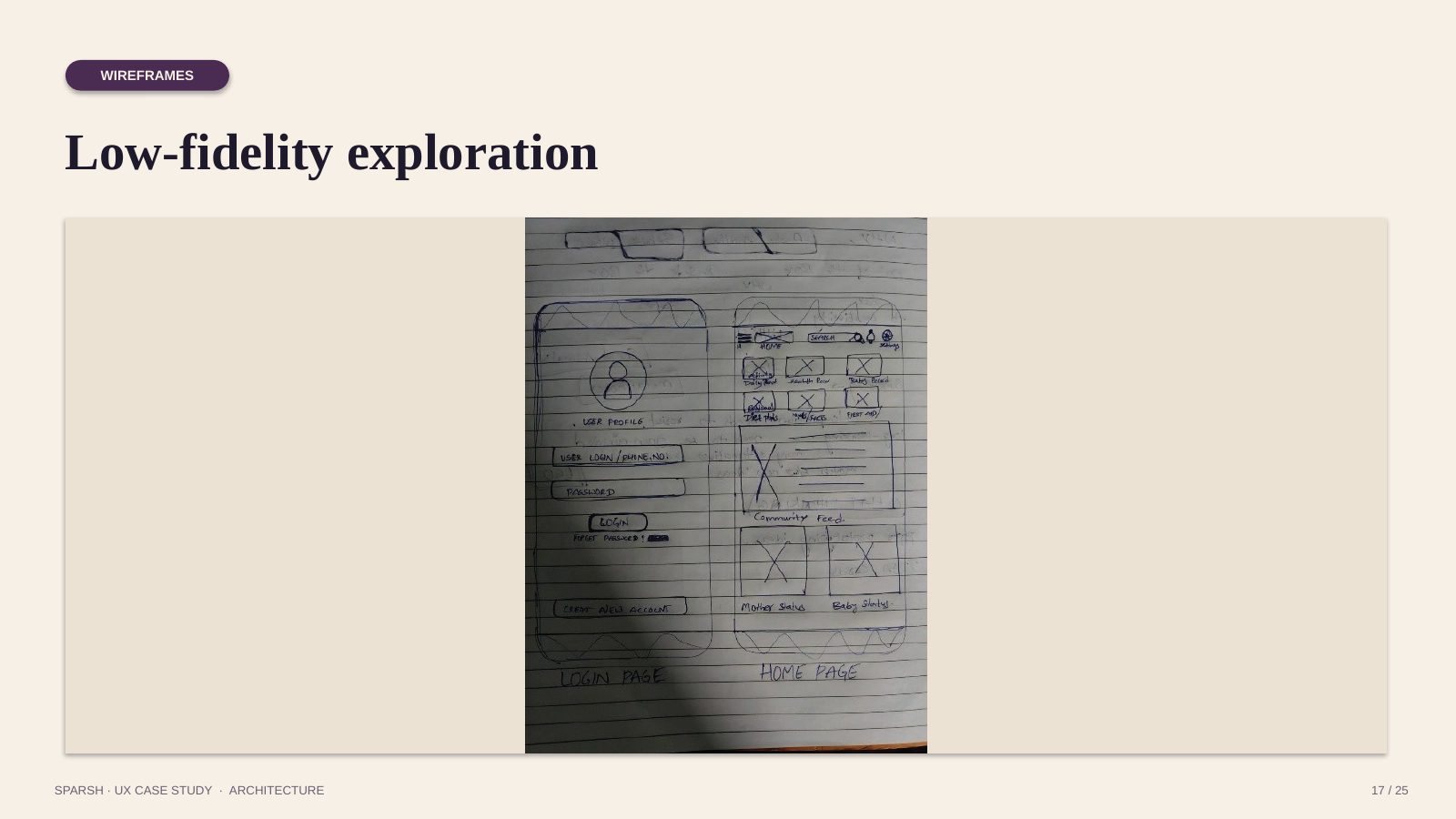
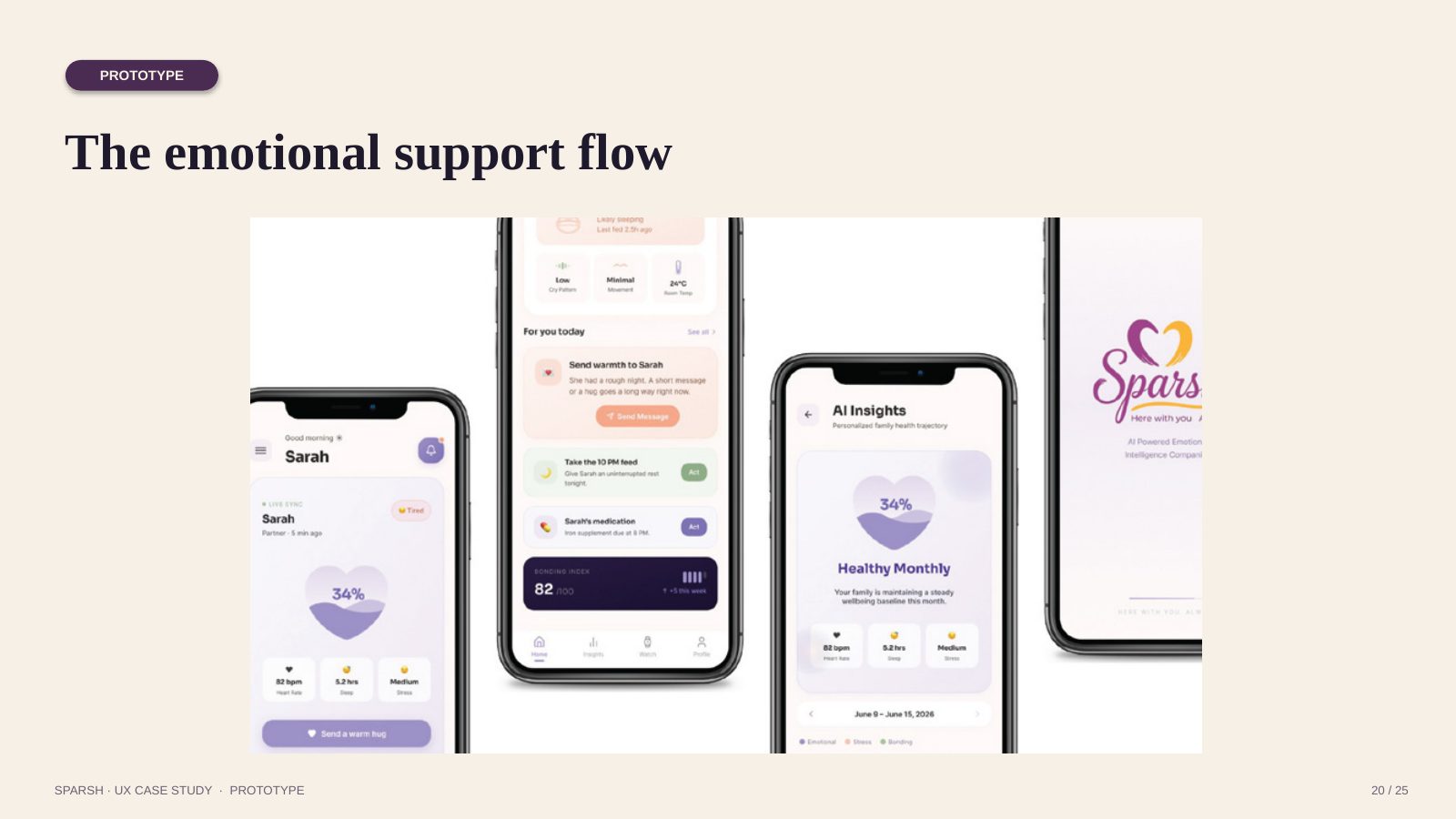
In the low-fidelity wireframes, I replaced heavy text typing with quick-tap mood buttons, made the AI chat interface look like a friendly messaging app, and kept the SOS trigger visible as a single-tap action.
Chemistry
Emotions & trust
Users felt emotionally lonely, isolated, and overwhelmed by the massive changes of pregnancy and new parenthood.
Fears, confusion & frustration
- A strong fear of childbirth and postpartum depression.
- Frustration from mood swings that partners didn't understand, leading to relationship conflicts and silent emotional suppression.
Trust issue
Users are highly protective of their personal, vulnerable emotions and health data. They might worry that an AI wouldn't truly understand human feelings, or that sharing their emotional distress might make them feel judged by family members.
Emotion the final UI creates
The UI must make users feel safe, deeply understood, calm and reassured.
Color
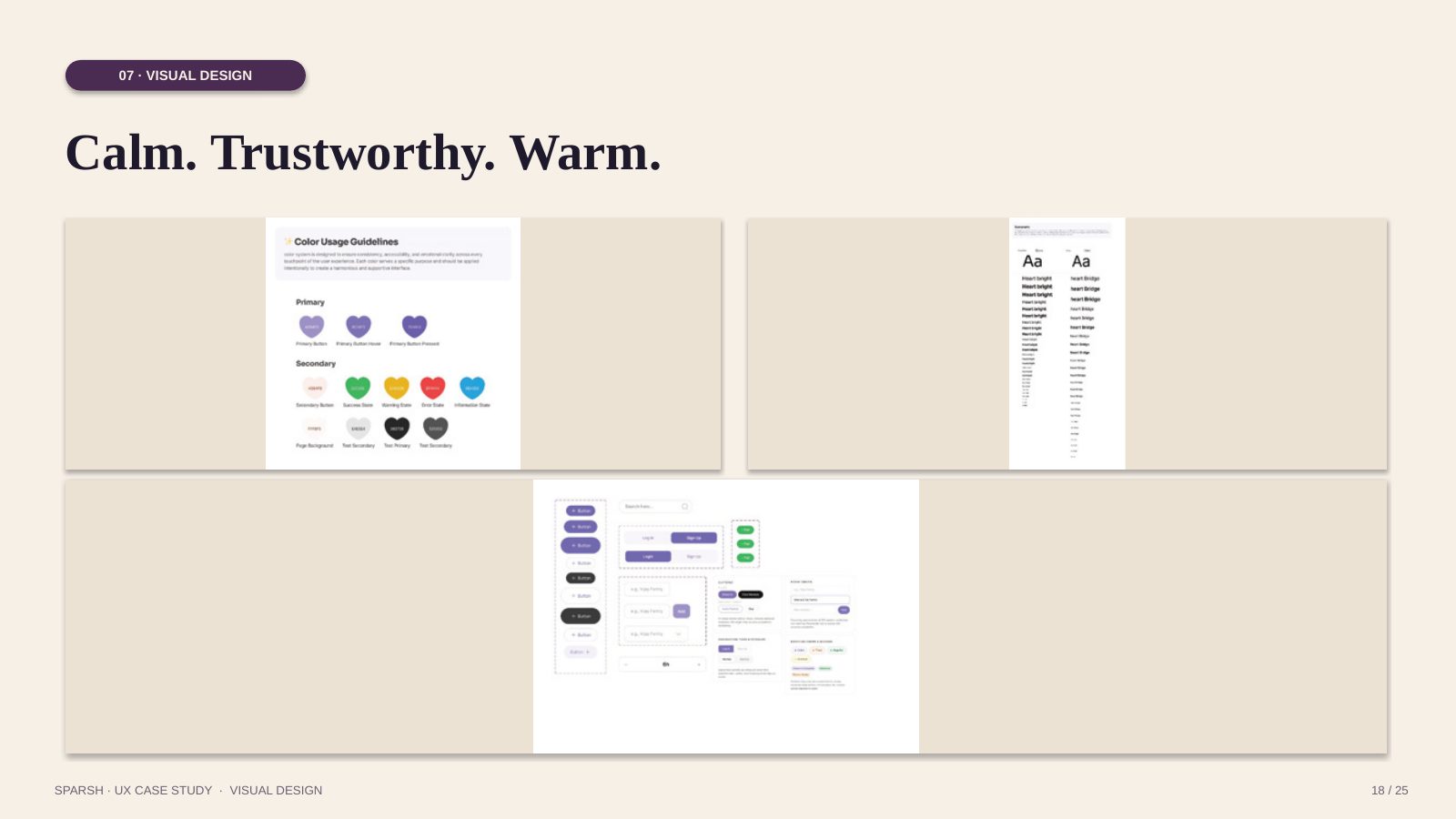
Soft, deep background tones keep the interface calming and easy on the eyes during late-night stress or exhaustion.
Copy
Messaging structured to sound like a gentle companion rather than a clinical medical tool — focused on care and encouragement.
Layout
Uncluttered, spacious layouts with clear visual hierarchies so the user never feels confused or trapped by a messy screen.
Interaction
Minimal, effortless interactions: quick-tap emotional check-ins and an instant SOS trigger, so a user under severe distress never has to hunt for help.
Biology
Behavior & habit loops
Repeated behavior
Expecting and new parents frequently hide their mental exhaustion, anxiety or sadness because they do not want to worry their partner or feel like a burden to their family.
Current workarounds
Instead of getting proper support, users typically look up symptoms on random search engines late at night, vent in anonymous online parenting forums, or simply suppress their feelings until an emotional breakdown happens.
Cue
A sudden spike in pregnancy stress, a mood swing, or a feeling of loneliness.
Routine
Bottling up the emotion, staying silent, or getting into an argument with their partner due to a misunderstanding.
Reward
Temporary relief from avoiding immediate conflict — but long-term increases in isolation and relationship strain.
Behavior the design changes
Shift users away from hiding their stress. Instead of keeping feelings buried, encourage them to quickly express their emotions in a safe, private space the moment stress starts to rise.
Feedback loop created
Trigger (biometric): the Sparsh Watch automatically detects elevated stress indicators, like a high heart rate. Action: the Sparsh App gently prompts a quick, simple emotional check-in. Reward: immediate comforting, personalized coping strategies from the AI companion and a stronger, more empathetic connection with their partner.
Mathematics
Proof & metrics
Research sample
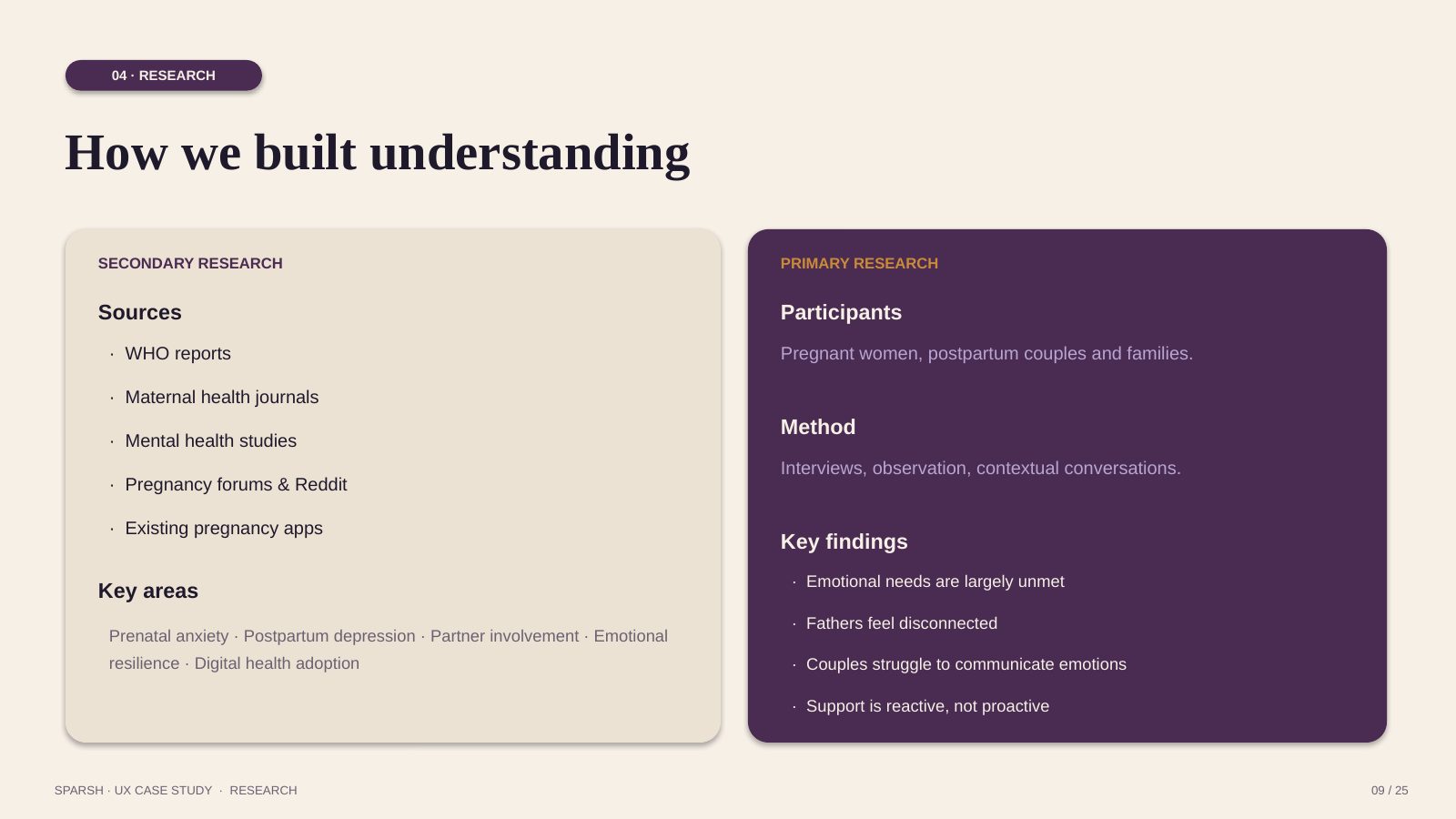
We analyzed existing clinical data on postpartum depression and reviewed open-source feedback from online parenting forums to quickly map out the 8 main user pain points.
Usability testing
3 internal hackathon team members and mentors who cross-verified the low-fidelity wireframes against the core user journeys.
Task completion
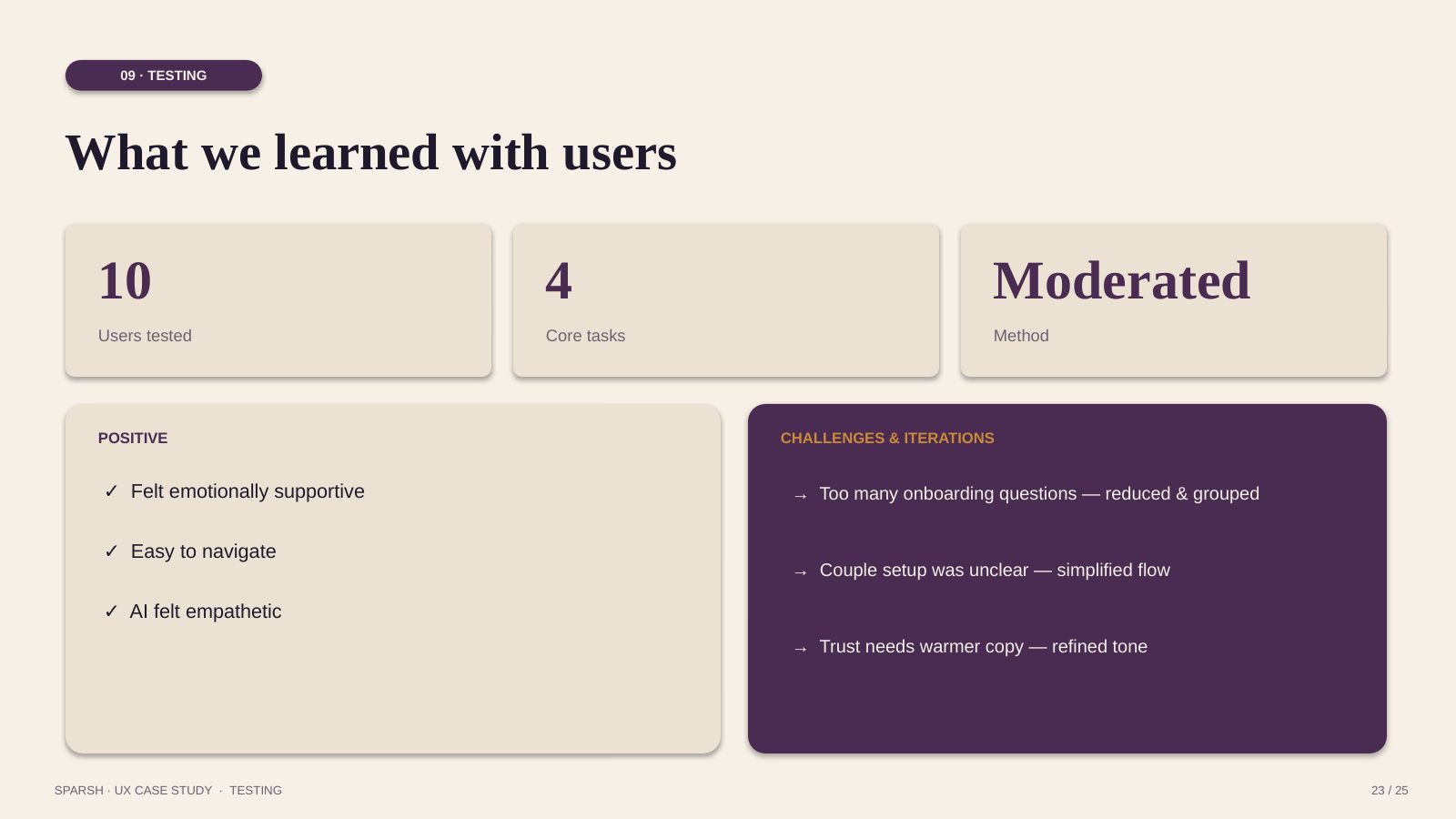
100% of internal testers successfully navigated the critical “Emotional SOS” and “AI Check-in” flows without needing instructions.
Effort reduced
Reduced the effort of emotional logging from a multi-step manual journal entry down to a single-tap emotional selection screen.
Errors reduced
Pre-set quick-tap mood buttons eliminated the user friction and drop-off risks caused by forcing exhausted parents to manually type out text.
Confidence rating
High. The layout clarity ensured testers felt fully in control of the automated alert system before any data was shared.
“During postpartum exhaustion, I don't have the energy to type. A watch that notices my stress and an app that just listens is exactly what's missing.”
Business / user impact
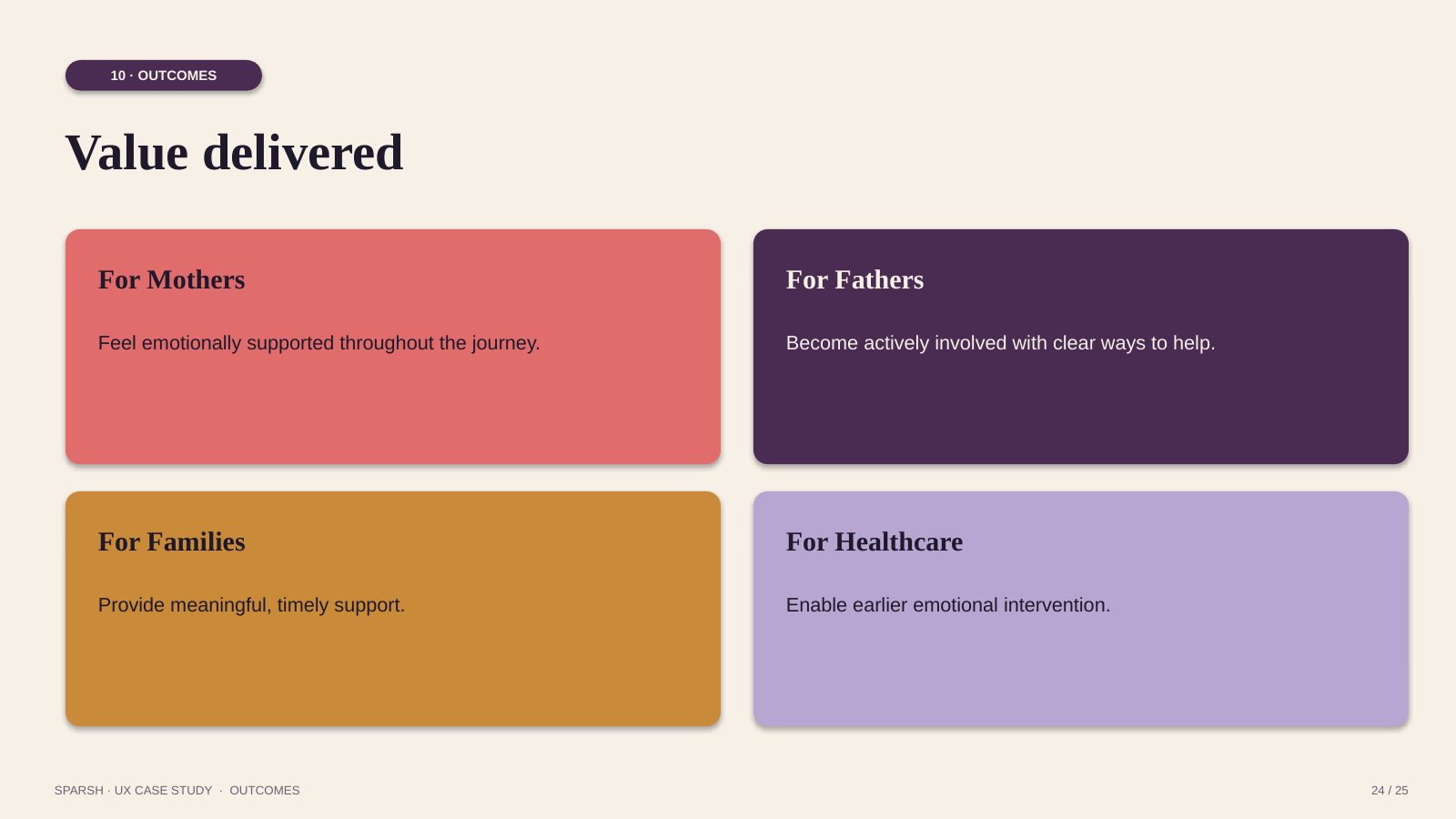
Successfully proved that bridging hardware biometrics with an empathetic AI ecosystem can create a proactive, preventive mental wellness loop for parents.
Metric to be validated
The long-term accuracy of the Sparsh Watch sensors in correctly separating physical exertion from actual emotional distress in a real-world setting.
Design Engineering
From idea to solution
Research & target users
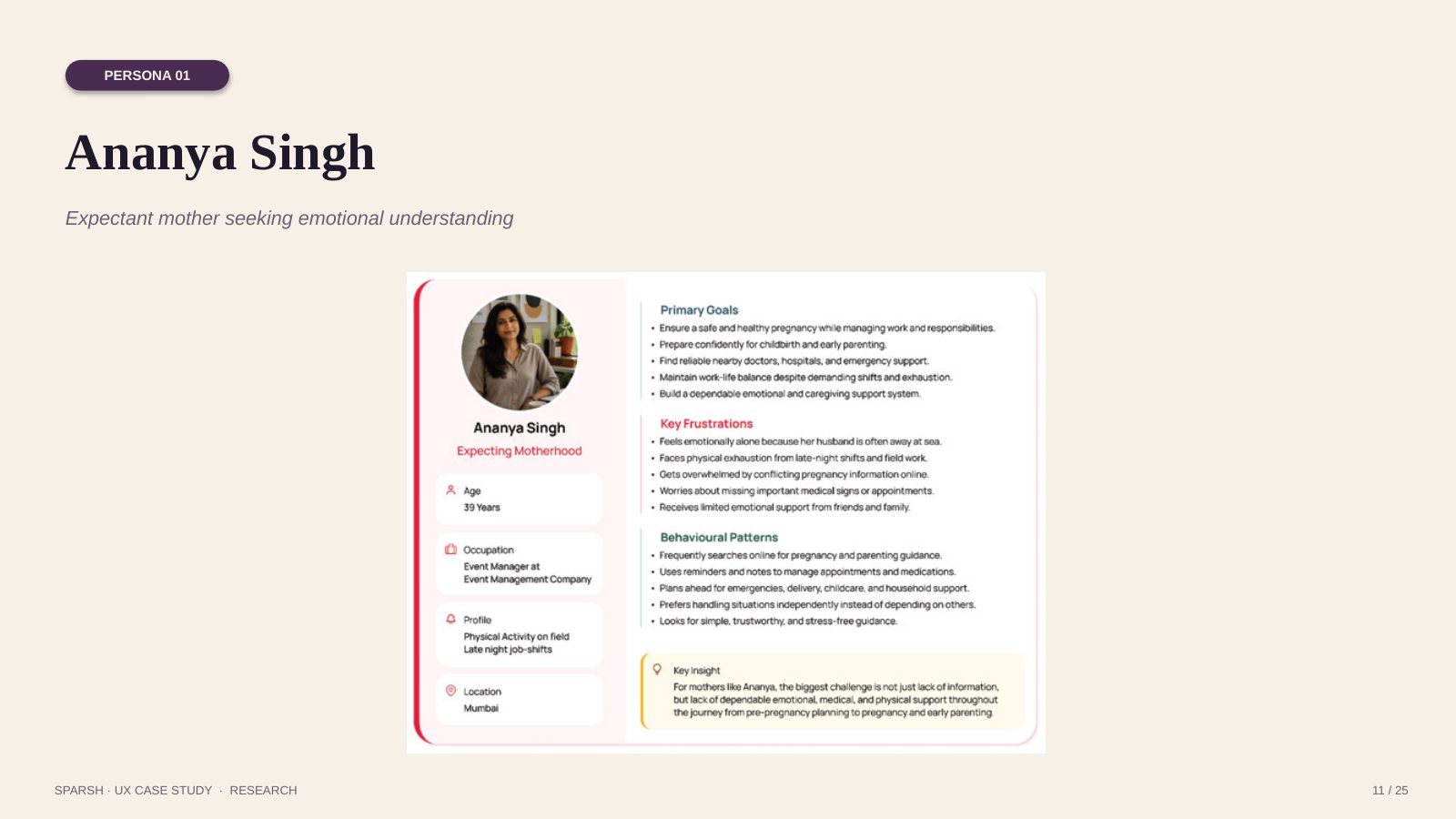
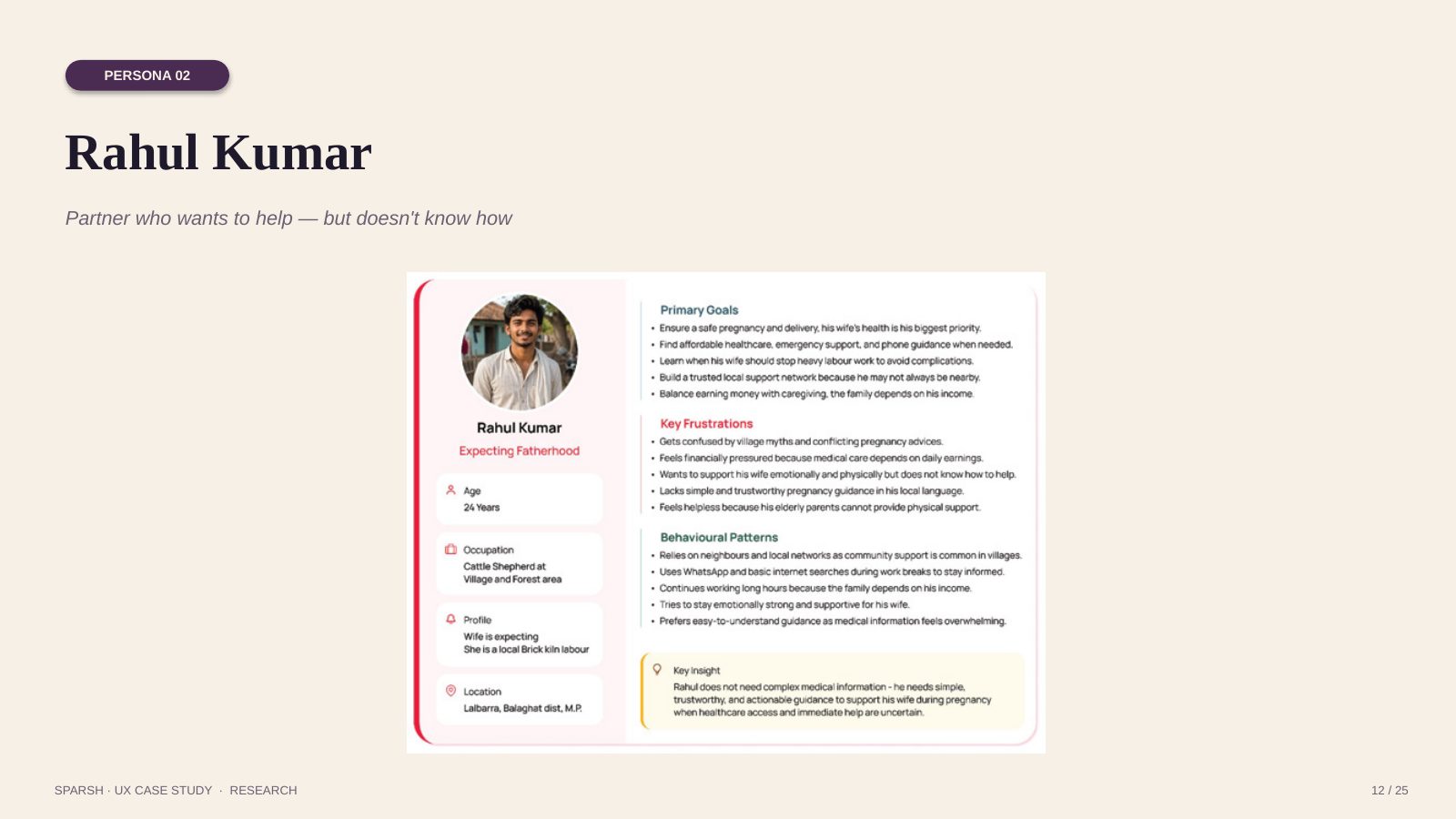
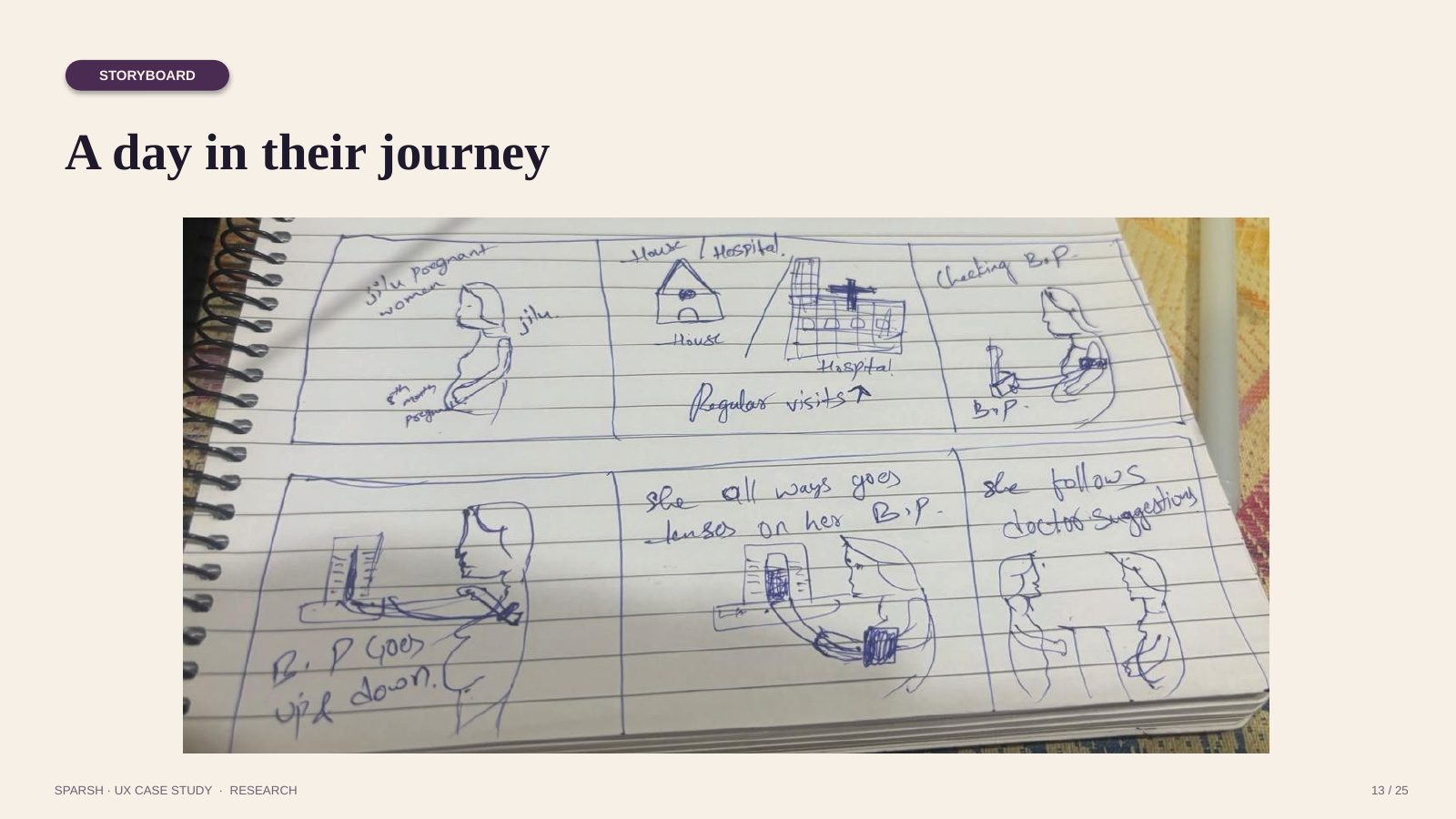
Analyzed the pain points of primary users (expecting mothers/fathers) and secondary users (family members and caregivers) to map out emotional triggers.
Information architecture
Formulated the core ecosystem flow connecting wearable sensor data to the Emotion Detection AI, syncing smoothly with the main Sparsh App and the Family Support Ecosystem.
Wireframes — my core contribution
Developed the low-fidelity wireframes to translate complex user flows — Emotional Check-ins, Couple Connection prompts and the Emotional SOS Alert — into clear, simple screen layouts.
Ecosystem ideation
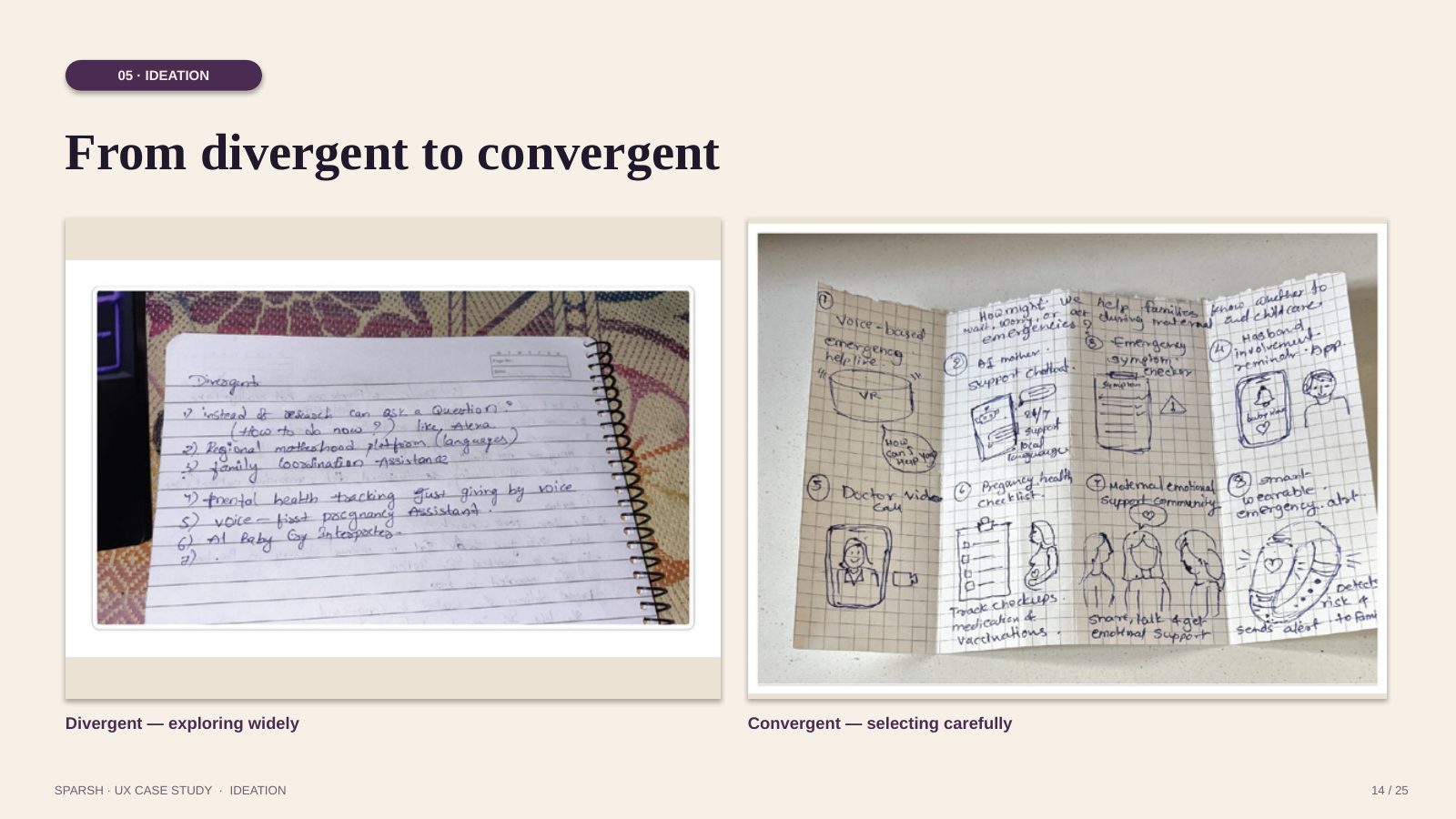
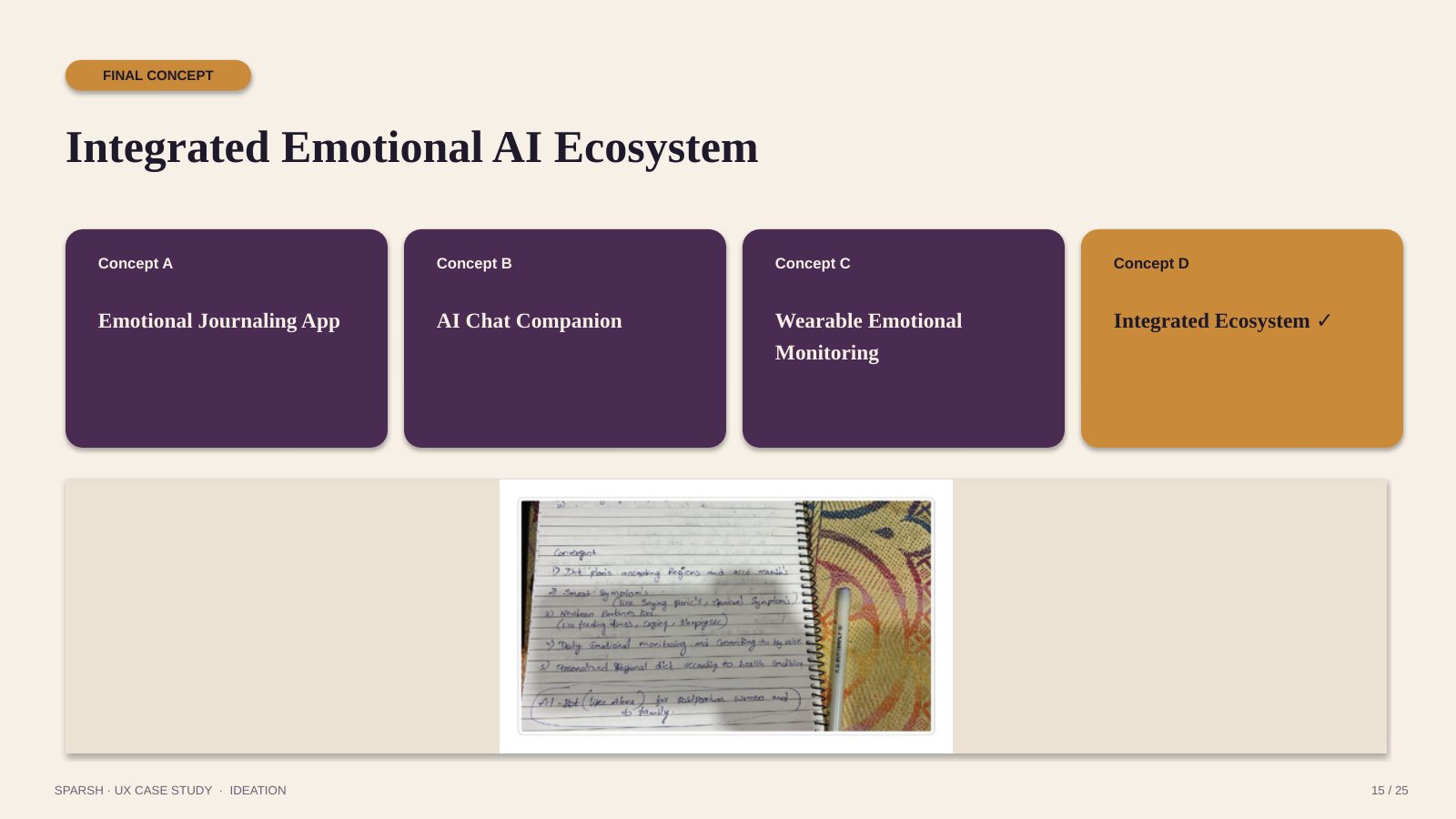
Collaborated on defining the core components: the emotional dashboard, mood tracking interfaces and the 24/7 AI conversational companion window.
STAR Story
Situation · Task · Action · Result
Situation
We designed Sparsh — the world's first AI-powered emotional companion ecosystem for expecting and postpartum couples. While traditional healthcare focus areas heavily target physical health, emotional well-being and relationship strain during pregnancy are often completely overlooked.
Task
We set out to solve the critical problem of emotional isolation, stress and unaddressed postpartum depression in expecting parents. The specific design challenge was to connect an intelligent wearable device (Sparsh Watch), a mobile app and a family support network into one seamless, easy-to-use digital ecosystem.
Action
- Analyzed pain points of primary users (expecting mothers/fathers) and secondary users (family members and caregivers) to map emotional triggers.
- Formulated the core ecosystem IA connecting wearable sensor data to the Emotion Detection AI, the Sparsh App and the Family Support Ecosystem.
- Developed the low-fidelity wireframes — my core contribution — translating complex flows like Emotional Check-ins, Couple Connection prompts and the Emotional SOS Alert into clear, simple screen layouts.
- Collaborated on ecosystem ideation: emotional dashboard, mood tracking interfaces and the 24/7 AI conversational companion window.
Result
- Created a cohesive product vision bridging hardware health monitoring and proactive, compassionate AI emotional care.
- 100% of internal testers navigated the Emotional SOS and AI Check-in flows without instructions.
- Emotional logging effort reduced from multi-step manual journaling to single-tap selection; quick-tap mood buttons eliminated typing friction for exhausted parents.
- Key design learning: designing for high-stress, sensitive situations (like an Emotional SOS or postpartum exhaustion) requires extreme simplicity — zero learning curves and high empathy with minimal interactions.
Before & After
The transformation
Before
- Emotional struggles during pregnancy largely ignored by healthcare products.
- Parents hiding stress, searching symptoms late at night or venting in anonymous forums.
- Manual journaling as the only way to log emotions — unrealistic during exhaustion.
After
- A proactive ecosystem: the watch notices stress, the app gently checks in.
- Quick-tap mood buttons, a friendly AI chat and a single-tap SOS.
- Coping strategies and partner connection delivered at the moment of need.
From silent suppression to a proactive, preventive mental wellness loop — hardware biometrics bridged with empathetic AI care.
Final Screens
Screens & Prorotype
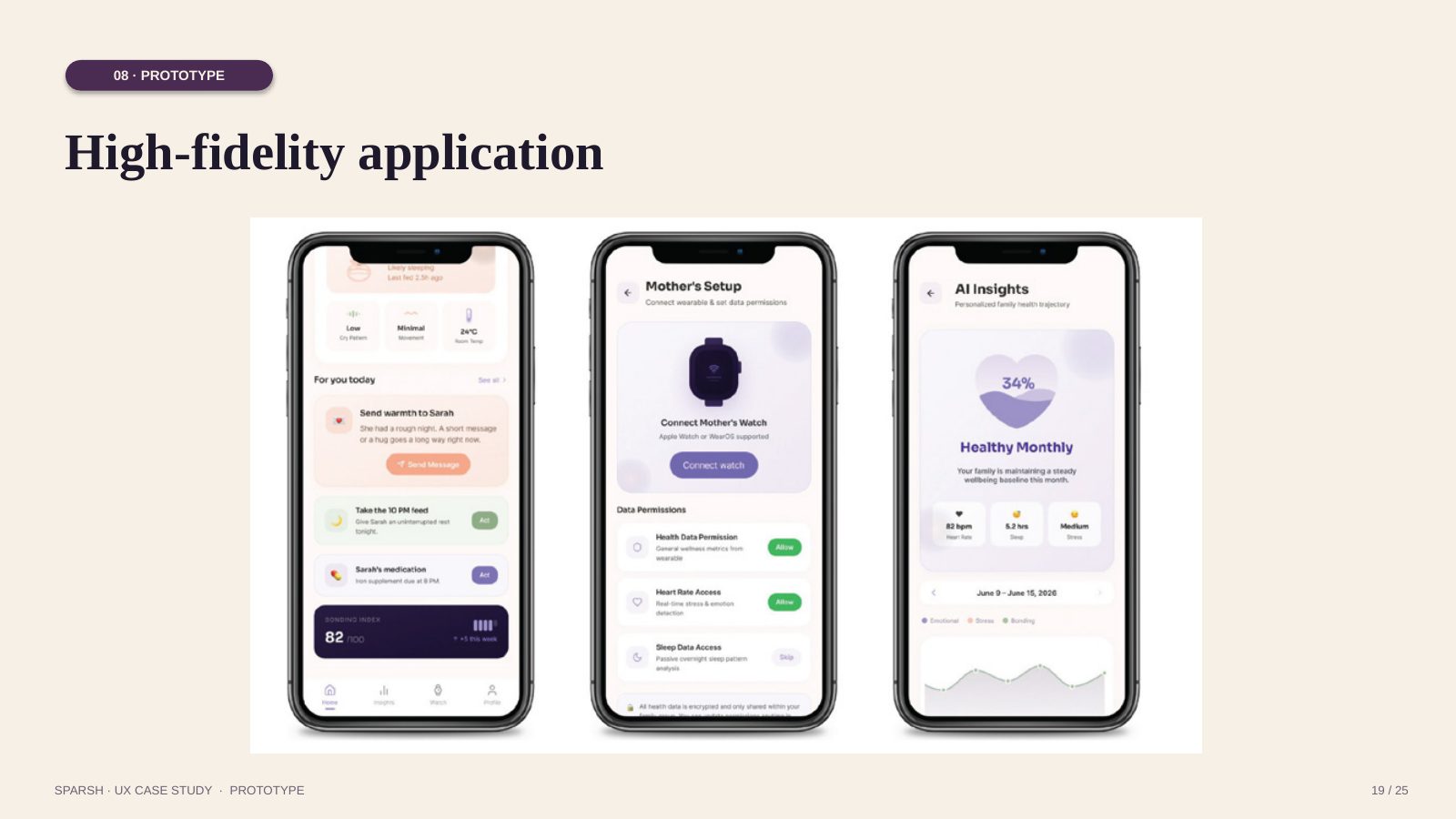
Sparsh interactive prototype
Open in FigmaFull Case Study
Read the master case study
Sparsh — Master case study (PDF)
Learnings
What I take away
What I learned
- Designing for high-stress, sensitive situations requires extreme simplicity — zero learning curve, high empathy, minimal interactions.
- Reducing input effort (typing → tapping) is often the single highest-impact UX decision in an emotional context.
What I would improve
Validating sensor accuracy — separating physical exertion from actual emotional distress in real-world settings — is the next critical step.
Future scope
Moving from validated low-fidelity wireframes toward high-fidelity design and real-world wearables testing.
Let's talk about this work
Happy to walk through decisions, process and next steps. My resume is one click away — or reach me directly.